
When most people hear "home AI system", they think smart lights and Alexa. Mine started with grief.
I'll be honest — I was late to the AI party, and when I finally showed up, I wasn't impressed.
ChatGPT was everywhere in early 2024. Everyone was talking about it. So I tried it. And yes, it was clever. But after a while, it just felt like a very confident search engine that occasionally made things up. I got bored. I moved on.
Then Gemini caught my attention. And this time, something clicked.
I was dealing with a problem at work — a SaaS vendor charging obscene amounts for a service that frankly wasn't worth it. I'd been putting off doing anything about it because the research alone felt overwhelming. Where do you even start? What are the alternatives? What would migration look like?
So one evening I just... started talking to Gemini about it.
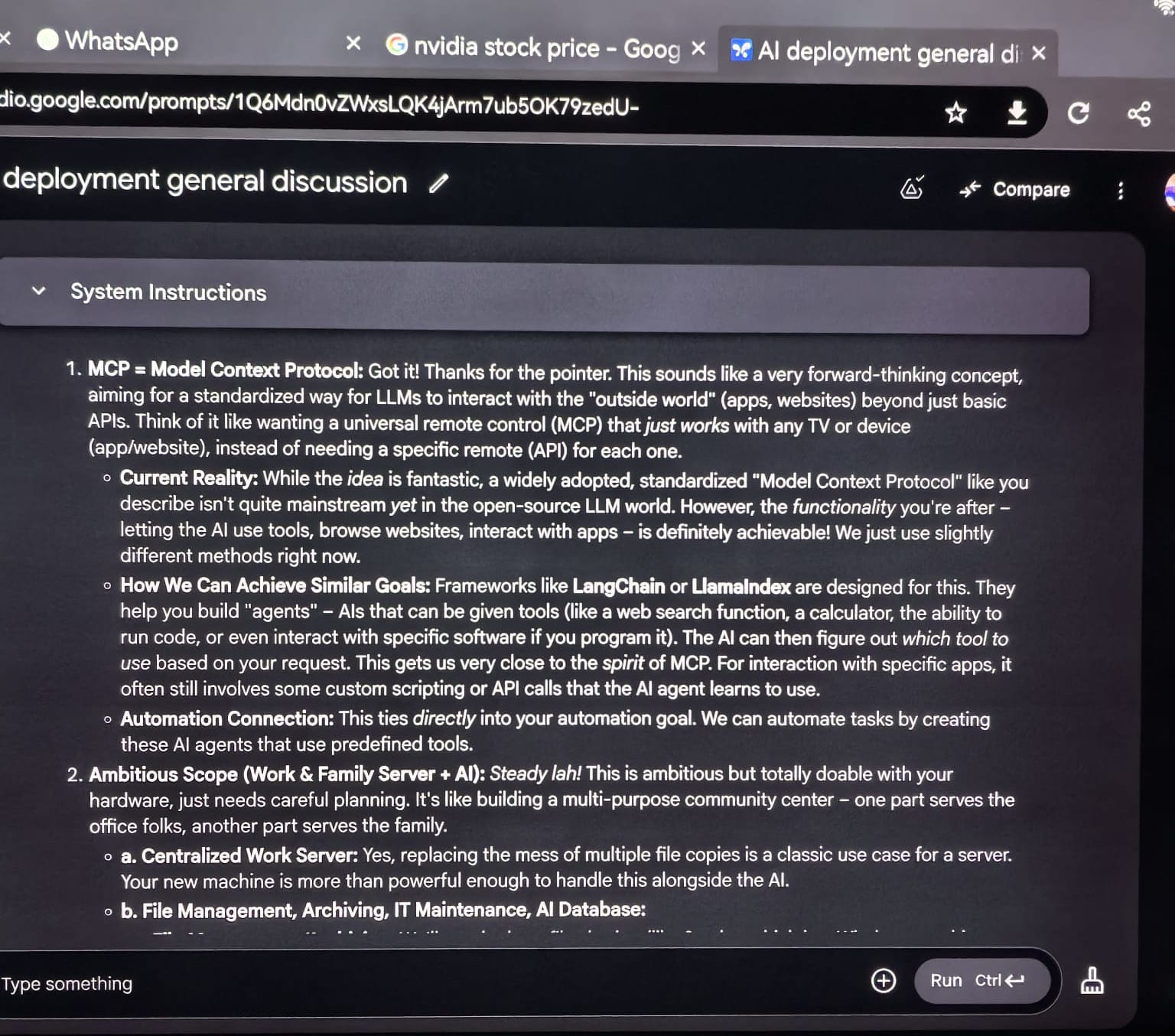
A few hours later, I had a clearer picture of the problem than I'd had after months of procrastinating. Not because the AI solved it — but because it cut through the part that always stopped me: the research. The dead ends. The time spent just trying to understand the landscape before you can even think about solutions.
That was the moment I understood what AI actually was. Not a chatbot. An enabler.
And once I saw it that way, I couldn't stop.
Three problems. One probably-too-ambitious plan.
Here's where I have to admit something: I tend to think big. Sometimes too big.
At the time, I had three problems sitting on my desk that had been there for years:
Problem 1: The company server was dying. Seven-plus years old, held together with prayers and deferred maintenance. It needed replacing. But if I was going to replace it, I wanted to do it properly — not just buy another box and repeat the same mistakes.
Problem 2: I wanted a proper family system. Passwords, documents, photos, videos — all scattered, all fragile. But this wasn't just a convenience thing for me. It was personal.
My mother passed away suddenly from a heart attack. No warning. No time to say goodbye, and no time to leave instructions. On top of the grief — and grief is already brutal — we had to scramble through her affairs trying to piece together her estate. What accounts did she have? Where were the documents? What did she want?
I remember thinking: there has to be a better way. Not to avoid death — nothing avoids that — but to make sure that when it happens, the people left behind aren't drowning in chaos on top of everything else. A proper family archive. A legacy system. Something that actually preserves what matters.
Problem 3: I was done with SaaS that didn't fit and IT support that couldn't keep up. SaaS sounds great in theory — someone else handles the infrastructure, you just pay and use. The reality is that SaaS is designed to serve everyone, which means it ends up fitting no one perfectly. You pay for a hundred features, use ten, and spend half your time working around the ones that almost-but-don't-quite match how your business actually works.
The IT support wasn't bad people — it was a structural problem. One technician covering thirty to fifty companies. You do the math. By the time they got to your problem, you'd either solved it yourself or given up. And every hour they spent on you was billed accordingly.
So instead of solving these problems one at a time, like a sensible person, I decided to solve all three simultaneously. With a server I'd never built before. Using AI tools I'd just discovered. With IT knowledge that peaked sometime around DOS and a 386 processor.
Yes. I know.
The Frankenstein server
I started researching parts. AI helped me understand what I needed — CPU, RAM, storage, networking. But the GPU was the headache.
This was mid-2024. The AI hype had consumed every decent GPU on the market. I wanted a proper one for running local AI models, but the wait was real. We ended up running on a loaner GPU from the vendor from April all the way to November. Seven months of "we're getting there."
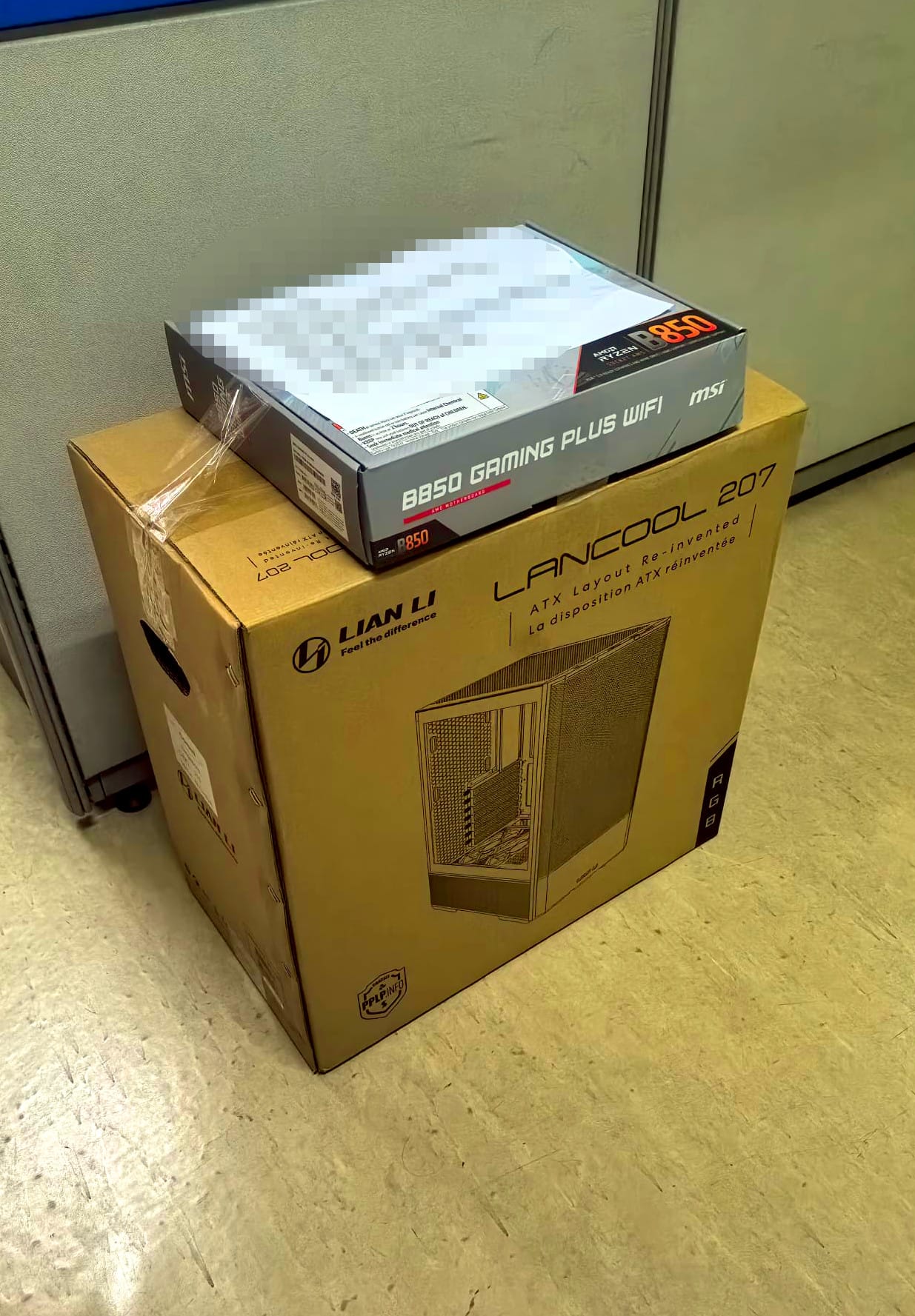
When the RTX Pro 4000 finally arrived in November, it felt like Christmas.
In the meantime, I was learning. Slowly. Painfully. Wonderfully.
The early days looked like this: open terminal, run a command, get an error, copy the entire output, paste it into the AI chat, read the explanation, try again. Repeat. For hours. For weeks.
It was not fast. It was not elegant. But every small win felt enormous, because I was doing things I genuinely didn't think I could do.
The moment everything accelerated
Somewhere around May, I discovered Claude.
I don't remember exactly what made me switch. But I remember the moment I first used the Artifacts feature — the ability to generate and iterate on actual working files, not just text — and something shifted. It felt like that scene in a movie where the actor stands still while the world transforms around them. Technology moving faster than you can track. Every week, something new.
MCP — Model Context Protocol — was the real inflection point. Suddenly AI wasn't just answering questions. It was connecting to systems, taking actions, building things. An API integration that used to take me days, sometimes weeks of research and trial and error, could now be scaffolded in hours.
I had to stop and ask myself: what am I actually building here?
The hard lesson
The honest answer was: too much.
I'd set out to solve the family system AND the company infrastructure AND replace the SaaS stack AND build an AI platform, all at once. For someone whose last serious IT experience was watching Windows 95 install from floppy disks, this was ambitious to the point of delusion.
So I made a call. Family system goes on the backlog. Focus on the company first. Get the business results first, and let the personal project wait.
It was the right decision.
Over the following months, we replaced our aging PCs with thin clients. We built a full digital document archive with proper ingestion and retrieval — no more hunting through filing cabinets. We connected directly to our accounting software's database for real-time analysis. We automated our delivery picking lists — what used to require three people checking and cross-referencing orders now runs with one, and the error rate dropped to near zero.
We dropped several SaaS subscriptions. We parted ways with our IT support company. The savings were significant — thousands a month.
And I did most of it myself. With AI as the co-pilot.
So what is this blog?
I'm Vincent. I'm 50. I ran a trading company for years and I'm in the process of winding it down. I'm not a developer. I'm not a cloud architect. My formal IT education stopped somewhere around the age when owning a CD-ROM drive made you cool.
But over the past eleven months, I've actually built two production-grade AI infrastructures. The first for the company — the one that cut costs, automated the picking lists, replaced the SaaS stack. Then the company wound down, the server came home, and within about a week the whole thing was repurposed into what it is today: a family AI system running our documents, photos, passwords, and memories.
And I want to write about it. Not to show off. But because I think a lot of people like me — business owners, working professionals, people who are curious but intimidated — are still using AI as a smarter Google. Ask a question, get an answer, close the tab, move on. And walking away thinking: okay, neat trick, but not really for me.
I thought that too. For longer than I'd like to admit.
This blog is about what changed my mind. And how you can get there faster than I did.
Next: What exactly did I build — and what does a "family AI system" actually mean when it's not about smart lights?